Most nurses glance at their paycheck, look at the total deposit, and move on. But if you work in healthcare: especially with shift differentials, weekend pay, overtime, preceptor pay, or bonuses, your paycheck is much more complicated than a simple hourly wage.
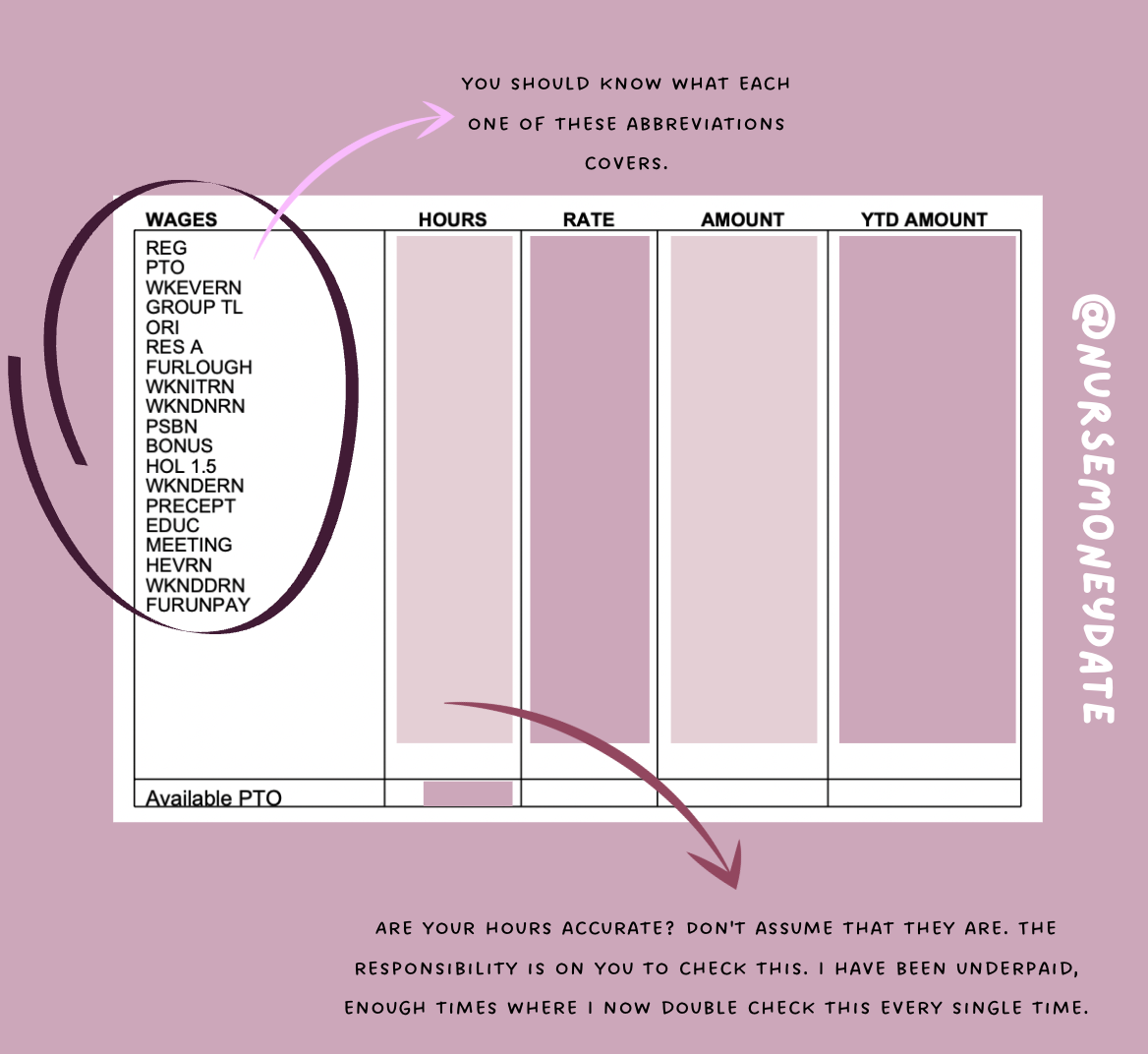
And that complexity means mistakes happen. I’ve personally been underpaid before. Not maliciously: just due to payroll coding errors.
That experience taught me something important: You should know exactly how to read and audit your paycheck.
Not obsessively. But confidently. Here’s what to check.
Step 1: Understand the Wage Codes
Most pay stubs include a Wages column filled with abbreviations that represent different types of pay.
Examples you might see:
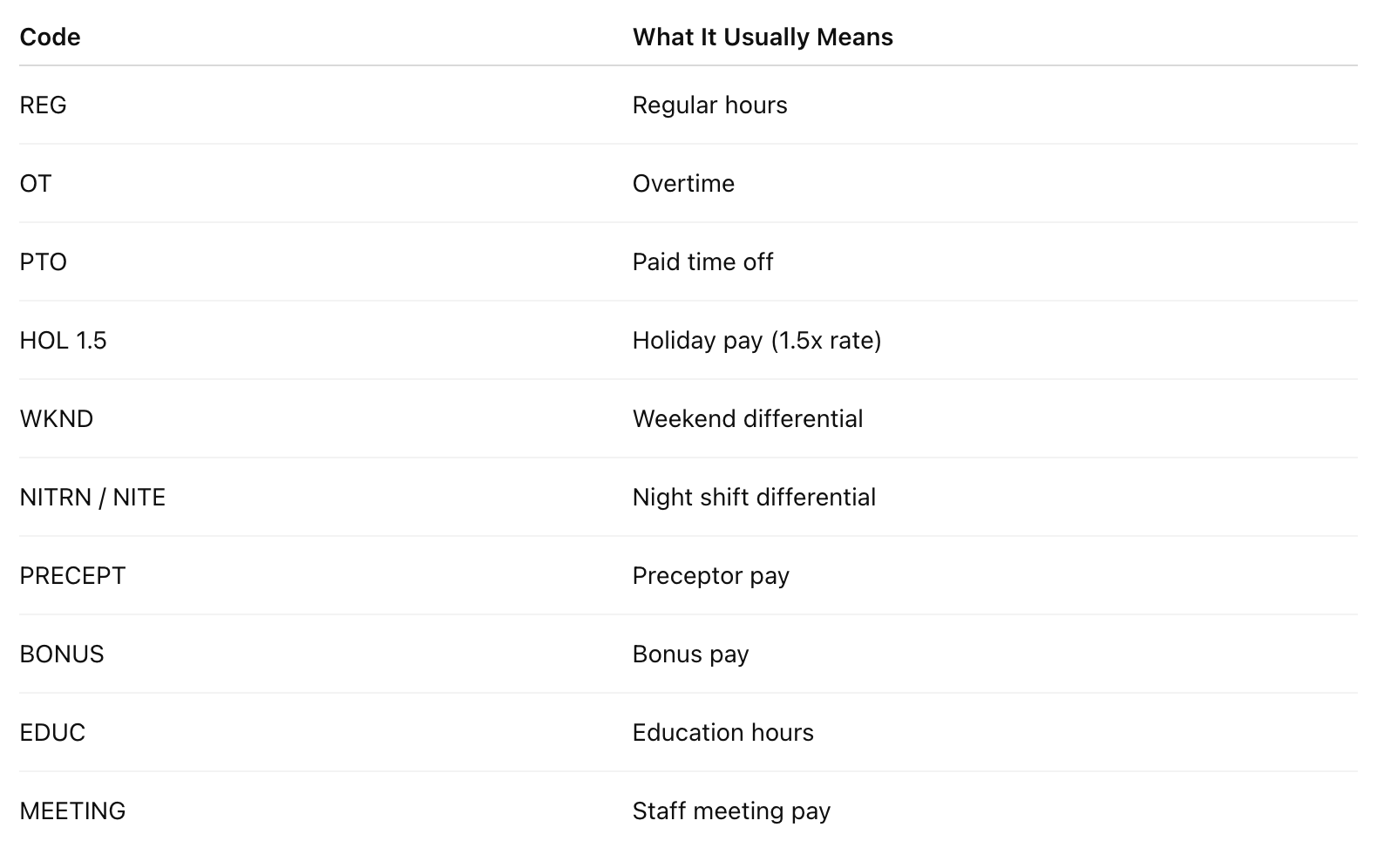
Hospitals often create their own internal abbreviations, so the exact codes may differ. The key point: You should know what every code on your paystub represents.
If you see a code you don't recognize, ask payroll or HR to explain it.
Step 2: Check the Hours Column
Next, look at the Hours column.
Ask yourself:
• Do the hours match the shifts I worked?
• Are my overtime hours correct?
• Did PTO hours post correctly?
• Did preceptor or meeting hours get included?
This is where many errors occur.
Example:
You worked 36 hours regular + 8 hours overtime
But payroll accidentally records:
• 44 regular hours
• 0 overtime hours
That mistake would reduce your pay significantly.
Always confirm your total hours and overtime classification.
Step 3: Verify the Pay Rate
Next, check the Rate column.
This should match the rate associated with each type of pay.
For example:
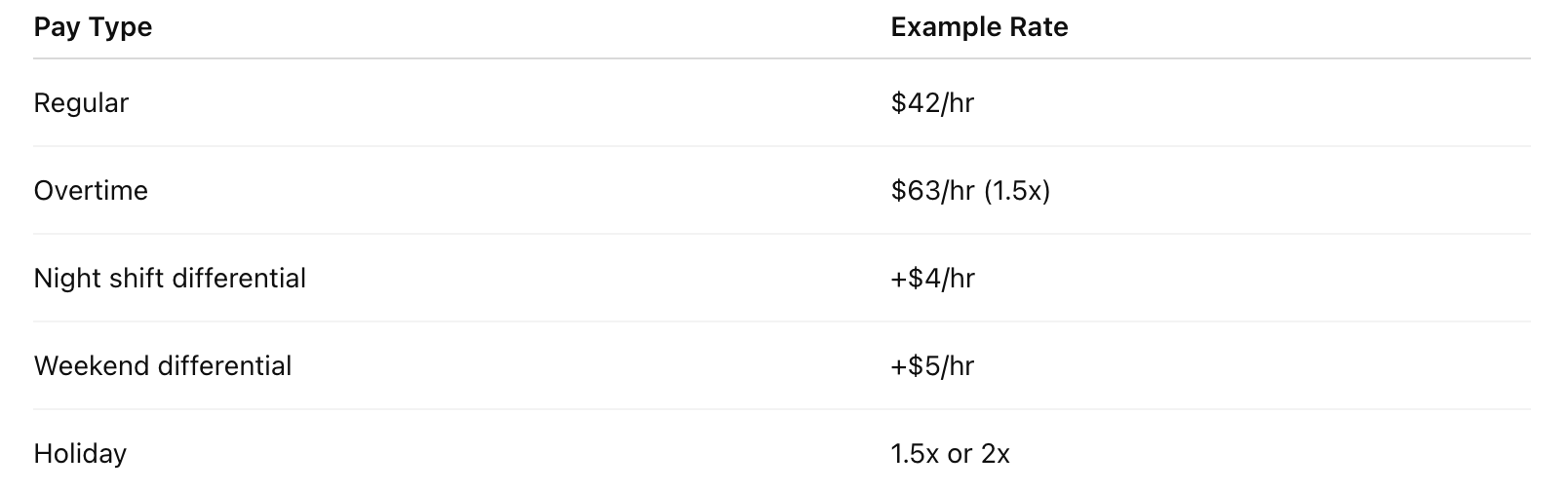
This becomes especially important if you work night shift or weekend shifts, where your rate can change within the same shift.
For example:
• 7pm–11pm = evening differential
• 11pm–7am = night differential
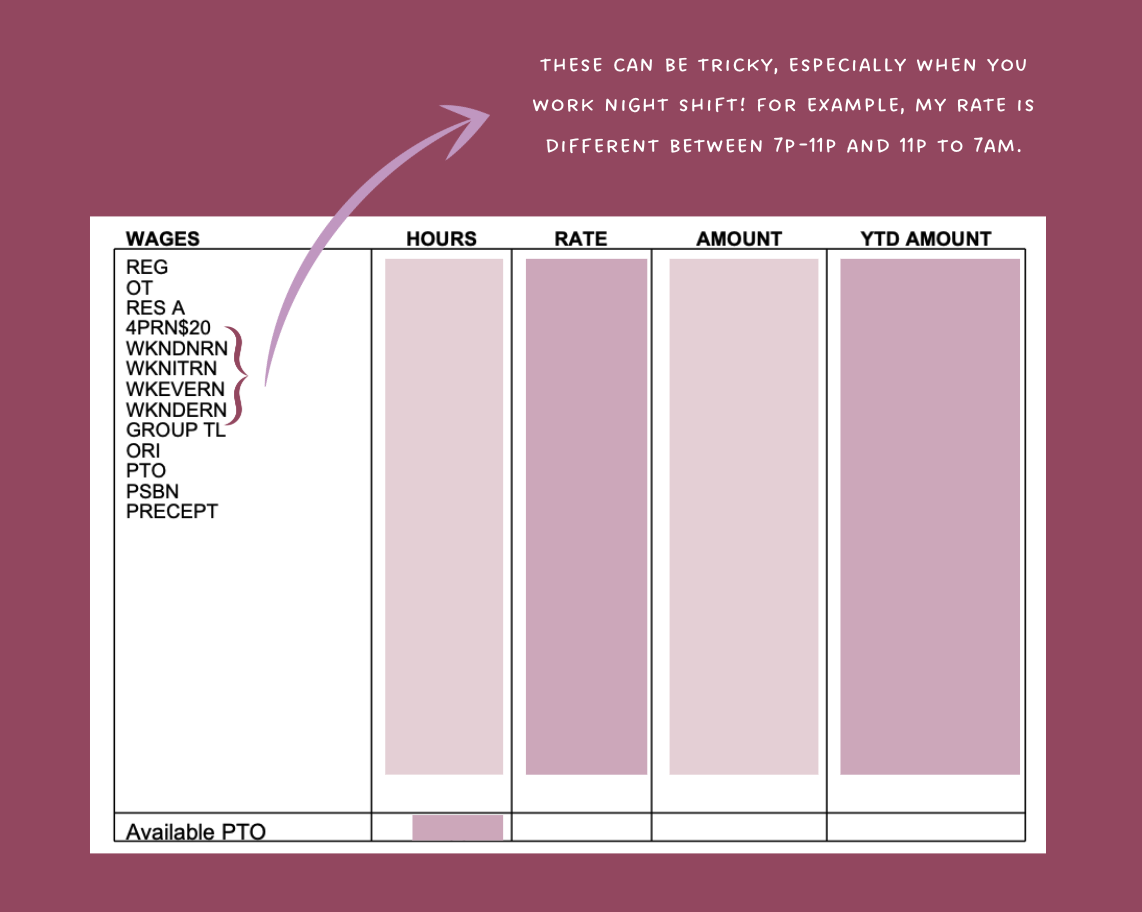
Payroll systems split these automatically, but only if coded correctly.
Step 4: Confirm the Amount Column
Once hours and rate are correct, the Amount column should be straightforward.
Amount =
Hours × Rate
Example:
12 hours × $42 = $504
If the amount looks wrong, one of the earlier columns likely contains an error.
Step 5: Check Your Year-to-Date Totals
The YTD Amount column shows how much you've earned so far this year.
This number matters because it affects:
• retirement contributions
• tax withholding
• Social Security wages
• overtime calculations in some systems
It also helps you track your true annual income.
Many nurses underestimate how much they actually earn because their income varies week to week.
Step 6: Check Your PTO Balance
Most pay stubs also list Available PTO.
Confirm:
• PTO accrual matches your hospital policy
• PTO hours were deducted correctly when used
PTO errors happen more often than people expect.
Why This Matters
Payroll systems process thousands of employees at once.
Mistakes are rarely intentional, but they do occur.
If you don't check your paycheck, you might never notice.
Think of this like charting as a nurse.
You don’t assume the medication dose is correct.
You verify it.
Your paycheck deserves the same attention.
A Simple Habit That Protects Your Income
You don’t need to spend an hour auditing every check.
But once every pay period, take 60 seconds and ask:
• Do the hours match my shifts?
• Are differentials showing correctly?
• Is overtime coded correctly?
• Is PTO accurate?
If something looks wrong, contact payroll immediately.
Most systems can fix errors quickly when caught early.
The Real Financial Lesson
One of the quiet skills of building wealth is learning to pay attention to your money.
Not obsessively.
But intentionally.
Your paycheck is the starting point of your entire financial life:
• investing
• saving
• debt payoff
• retirement
And that means step one is simple:
Make sure you're actually being paid correctly.